


Christian Apparel With High Quality Fabric: A Buyer's Guide
Quick Summary
Judge christian apparel with high quality fabric by its fiber composition, fabric weight and construction rather than the slogan alone. Ring-spun, 100% cotton breathes and softens well, while cotton-polyester blends resist shrinkage and hold their shape. Check for stated percentages, double-needle stitching and a ribbed collar before you buy.
- Read the composition line first; a percentage like 100% cotton tells you more than a vague blend.
- The organic ring-spun cotton tee is listed at 5.3 oz./yd² (180 g/m²) in single jersey construction.
- Double-needle stitching on sleeves and hems resists unravelling, and a 1x1 rib collar holds its shape.
- Wash printed shirts cold, inside out, at no more than 30°C (90°F), and tumble dry on low heat.
Table of Contents
- What Makes Christian Apparel High Quality Fabric
- Christian Apparel Fabric Guide: Cotton, Blends and Fleece Compared
- Comparing Christian Apparel Options and Pricing
- Durable Christian Apparel: Fit, Shrinkage and Long-Term Wear
- How to Care for Printed Christian Shirts
- Choosing Christian Dresses and Everyday Pieces With Quality Fabric
- Choosing Your Next Piece: A Quality Checklist Before You Buy
- Frequently Asked Questions
What Makes Christian Apparel High Quality Fabric
Last Updated: November 17, 2026
Christian apparel with high quality fabric is easier to judge than most shoppers expect. The shirt that holds its colour, keeps its shape and feels soft after the tenth wash almost always comes down to a few specifications printed on the care label or the product page. This guide from ClaimedbyGodDesigns walks through what those specifications mean, so you can compare faith-inspired pieces on fabric rather than on the slogan alone.
Start with the fiber content. Cotton is the most common base for printed tees, and the question is whether it is 100% cotton or a blend with polyester. Blends resist shrinkage and dry faster, while pure cotton tends to breathe better and softens with wear. Neither is automatically superior, but a blend listed without a percentage tells you little.
Reading Fabric Composition on a Label
Read the composition line before anything else. Percentages matter: "60% cotton, 40% polyester" behaves very differently from "100% ring-spun cotton." Look for the weave or knit type as well, since single jersey is the standard for lightweight tees and fleece is the usual choice for hoodies.
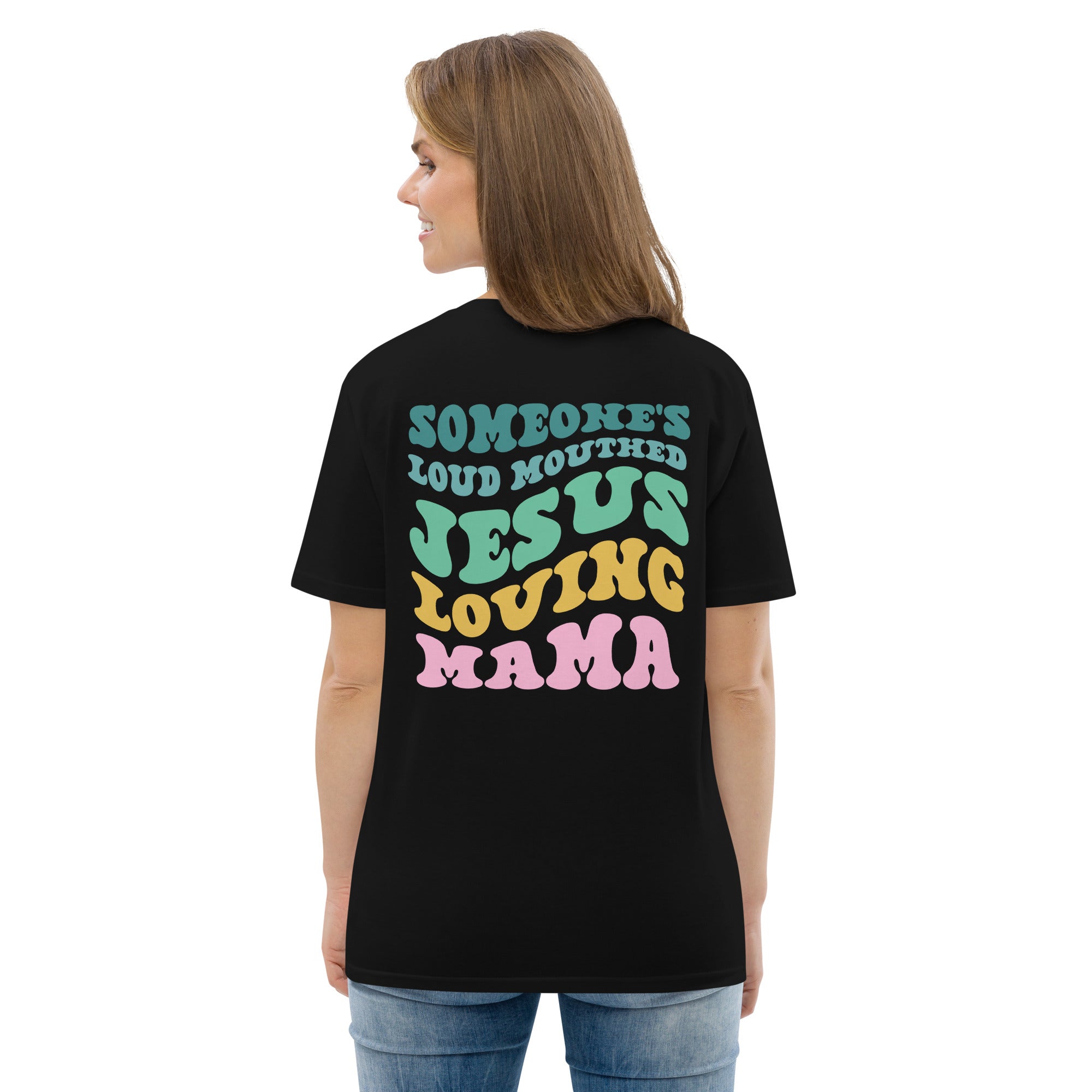
Our own organic cotton tee, the Sòmeone's loud mouthed Mama Funny Christian Women's organic cotton t-shirt, is listed as 100% organic ring-spun cotton with a fabric weight of 5.3 oz./yd² (180 g/m²) and single jersey construction.
Fabric Weight, Ring-Spun Yarn and Construction Details
Fabric weight, usually given in ounces per square yard or grams per square metre, tells you how substantial the cloth is. Heavier fabric drapes differently and tends to last longer under repeated washing. Ring-spun yarn is spun with a finer, more twisted fibre structure, which produces a smoother, softer surface than open-end yarn.
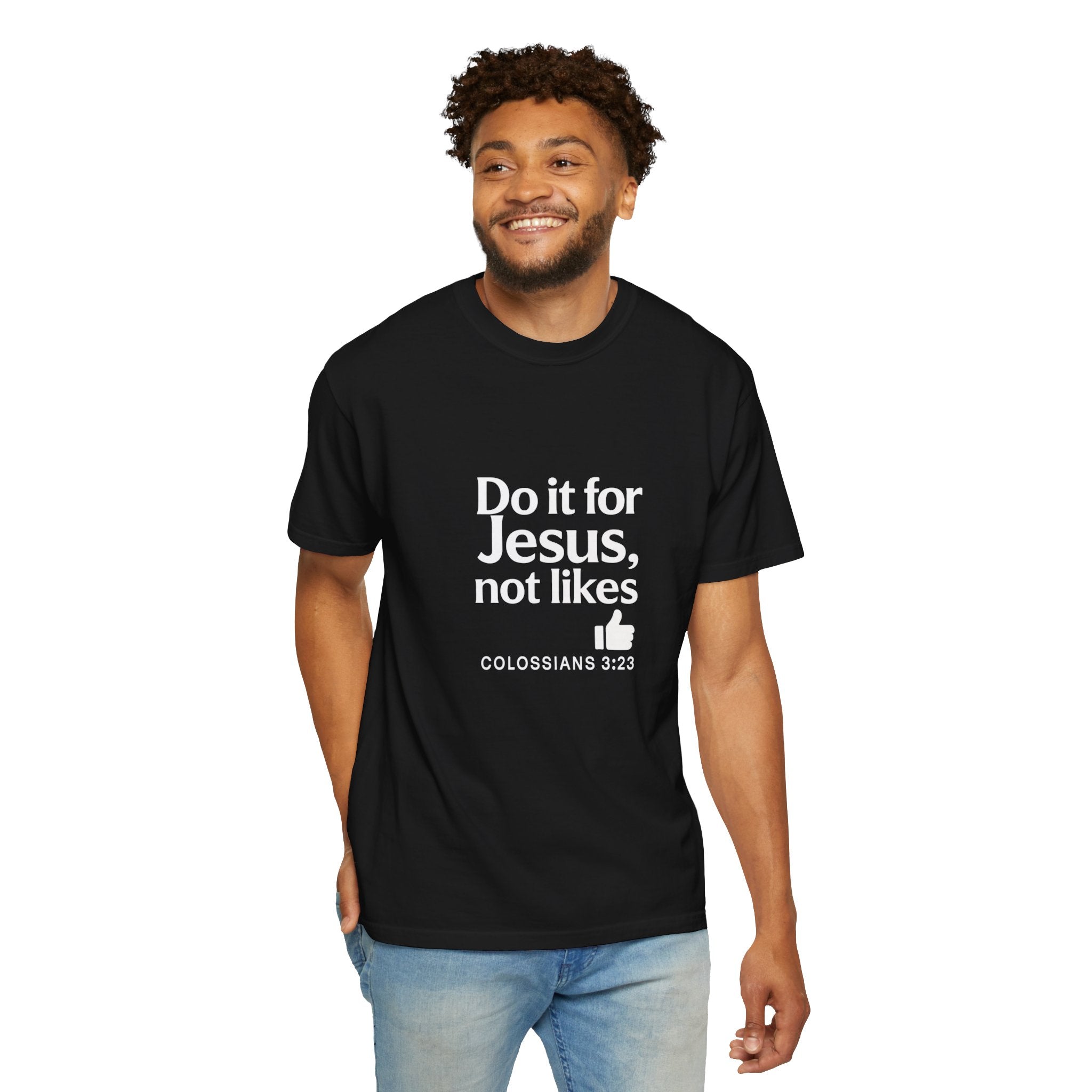
Construction details matter too. Double-needle stitching on sleeves and hems resists unravelling, and a 1x1 rib at the collar holds its shape. Our Do It For Jesus Christian T-Shirt is listed with double-needle stitching and garment-dyed fabric, while the Keep Calm Trust Jesus Funny Christian T-Shirt is listed as made without side seams.
Christian Apparel Fabric Guide: Cotton, Blends and Fleece Compared
Fabric choice is the single biggest lever on how a Christian tee or hoodie feels on day one and on wash fifty. The four families below cover almost every faith-based piece you will encounter, and each behaves differently because of how the fiber and knit are structured, not because of marketing language.
100% cotton (including ring-spun and organic). Cotton is a staple fiber with natural crimp, so it traps a little air and breathes well in warm weather. Ring-spun cotton uses finer, more tightly twisted fibers, which is why it feels smoother against the skin than open-end cotton at the same weight.
Cotton-polyester blends. Adding polyester to cotton reduces shrinkage, speeds drying, and improves resistance to pilling and abrasion. Blends are offered in many ratios, and polyester does not absorb moisture the way cotton does, so higher-polyester blends can feel warmer in heat.
Fleece (usually cotton-polyester). Fleece is a knitted fabric that has been brushed on one or both sides to raise a soft pile. In hoodies it is typically a cotton-polyester mix in a medium-to-heavy weight, which is why it holds a structured silhouette and traps warmth.
Performance and synthetic fabrics. Some athletic-leaning apparel uses polyester or poly-spandex for stretch and quick drying, which is a general property of those fabrics.
Watch out: a listing that says "premium cotton blend" without percentages tells you nothing about which way the garment will behave, treat the missing number as a reason to keep looking.
Comparing Christian Apparel Options and Pricing
Price tracks fabric and construction more than the printed message. The table below summarises the catalogue prices and the fabric details listed for each item.
Product |
Price |
Fabric |
Best For |
|---|---|---|---|
Sòmeone's loud mouthed Mama Funny Christian Women's organic cotton t-shirt |
$29.99 |
100% organic ring-spun cotton, 5.3 oz./yd² |
Everyday wear, eco-conscious buyers |
$22.99 |
Garment-dyed cotton, double-needle stitching |
Casual and church-event wear |
|
Keep Calm Trust Jesus Funny Christian T-Shirt |
$21.99 |
100% ring-spun US cotton, no side seams |
Gifts and casual wear |
Inspirational Three-Panel Fleece Unisex Hoodie |
$49.99 |
Soft fleece, medium-heavy weight |
Cold weather and layering |
Citizenship Verified Christian Fleece Hoodie |
$49.99 |
Cotton-polyester blend |
Warmth and lounging |
The organic cotton tee is the most expensive tee in this range. The two garment-dyed tees sit lower and suit buyers who want a casual look without paying for organic sourcing. Both hoodies cost more than any tee, which is expected for fleece.
Be cautious about paying more for a print than for fabric. A higher price is justified when the composition and weight are stated; if a listing gives neither, the premium is for the design rather than the cloth.
Catalogue prices of the listed Christian apparel items
Durable Christian Apparel: Fit, Shrinkage and Long-Term Wear
Durability in a printed Christian shirt comes down to four measurable properties: shrinkage, colorfastness, pilling resistance, and shape retention. Most shoppers judge these only after a few washes, but you can predict them from the label and the construction before you buy.
Shrinkage. Cotton shrinks because the fibers relax and swell when wet, then contract as they dry. Pre-shrunk and garment-dyed cotton have already been through a wash cycle, so they move less. Blends with polyester shrink less because the synthetic fiber does not absorb water the same way.
Colorfastness. This is how well the dye stays in the fiber. Reactive dyes, common on quality cotton, bond chemically to the fiber and hold color through repeated washing.
Pilling resistance. Pilling is the small fuzz balls that form where fibers rub together, most often under the arms and at the cuffs. Longer-staple cotton and ring-spun yarn pill less because fewer short fibers work loose. Fleece pills more because the brushed surface sheds.
Shape retention. This is driven by knit tightness, fiber blend, and construction. A 1x1 rib collar holds its shape better than a self-fabric collar. Double-needle stitching on sleeves and hems resists unraveling.
Fit and sizing. Fit affects longevity because a shirt that is too snug stretches at the seams and print.
A repeatable quality check before you buy: confirm the fiber percentages, check for a stated fabric weight, look for pre-shrunk or garment-dyed language, scan for double-needle stitching and a ribbed collar, read the care label, and compare the size chart.
Watch out: drying a cotton shirt on high heat is the fastest way to combine shrinkage, print cracking, and pilling in a single cycle, low heat or hang-drying protects all three.
How to Care for Printed Christian Shirts
Printed designs fail first when they are washed hot or dried hard. The care instructions listed on our garment-dyed tees are: machine wash cold at no more than 30°C (90°F), do not bleach, tumble dry on low heat, and do not dry clean.
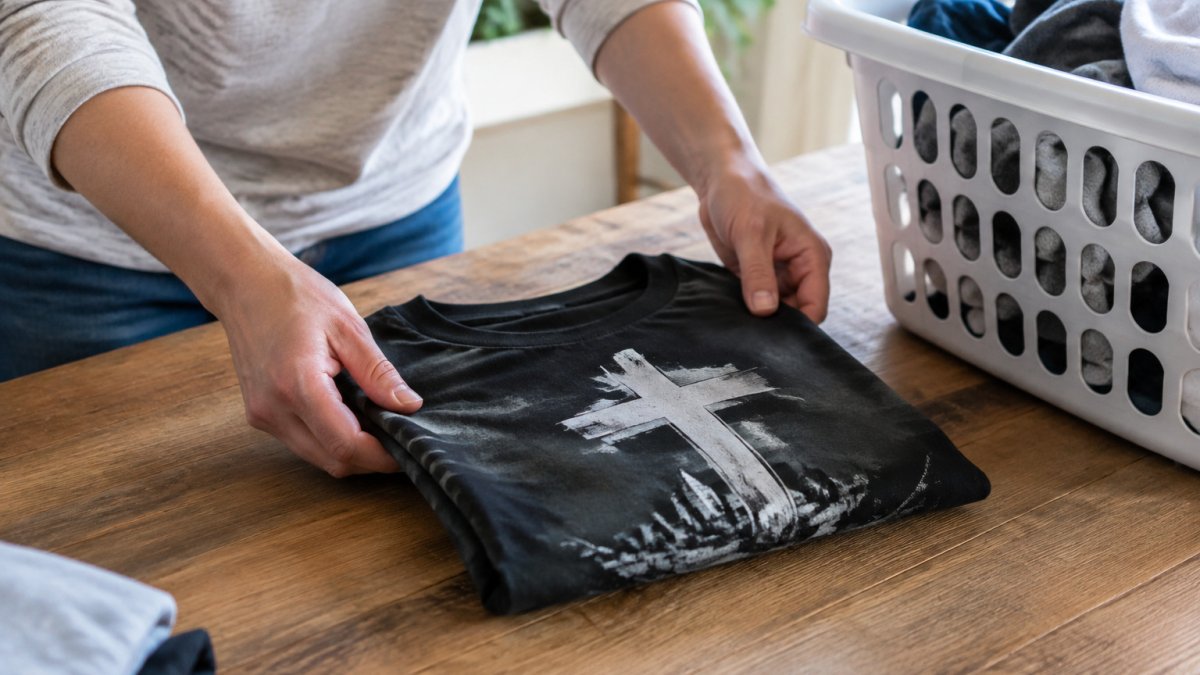
Turn the shirt inside out before washing to protect the print from abrasion. Avoid the dryer's high setting, since heat is the main cause of cracking on printed graphics. Hanging a shirt to dry is gentler still, particularly for fleece hoodies that can pill in a hot dryer.
Watch out: washing a printed shirt in hot water with heavy towels is the fastest way to crack the design, so keep the cycle cold and the dryer on low.
Choosing Christian Dresses and Everyday Pieces With Quality Fabric
The same fabric principles apply to dresses and everyday pieces. Look for a stated composition, a fabric weight where given, and a clear care label. Lightweight cotton suits warm weather, while a heavier knit holds structure through a full day of wear.
Christian dresses and layering pieces should be judged on comfort and how they move, not only on the message. Keep the fabric breathable for long wear and choose a fit you can sit and move in comfortably.
Choosing Your Next Piece: A Quality Checklist Before You Buy
Before you buy, check these points:
- Confirm the fibre composition and percentages are stated.
- Check the fabric weight, ideally in oz./yd² or g/m².
- Look for double-needle stitching on sleeves and hems.
- Read the care instructions and confirm they suit how you wash.
- Compare the size chart, especially if the brand sizes run differently.
- Decide whether you need pure cotton for comfort, a blend for durability, or fleece for warmth.
Use the checklist to narrow the field, then choose the piece whose fabric matches the way you will wear it. Explore the full ClaimedbyGodDesigns range to compare materials and prices side by side, and pick the piece that will still look and feel right after many washes.
Frequently Asked Questions
What fabrics are best for Christian apparel?
For everyday faith-based clothing, 100% ring-spun cotton and cotton-polyester blends are the most reliable choices. Ring-spun cotton is softer and holds its shape better than open-end cotton, which makes it a good fit for printed tees worn often. Fleece blends suit hoodies and sweatshirts because they add warmth without bulk. Check the composition on the label and look for a medium or heavier fabric weight if you want durability, since lighter jerseys tend to thin faster with repeated washing.
Is cotton or a cotton blend better for faith-based T-shirts?
Pure cotton offers breathability and a soft hand-feel, so it is comfortable against the skin during long days. Cotton blends with a small percentage of polyester resist shrinkage and wrinkles and can keep their shape longer. Neither is automatically better. If comfort and natural fibers matter most, choose 100% cotton. If you want a tee that stays neat through frequent washing and everyday movement, a light blend often performs better. Either way, the weight and knit construction matter as much as the fiber.
How can you tell if a T-shirt is made from high-quality fabric?
Start with the label: a clear fiber composition and a stated fabric weight are good signs. Look at the collar, which should have ribbing or neck tape that does not stretch out quickly. Check the seams for double-needle stitching, and hold the fabric up to light to see whether the weave is tight and even. Print quality also reveals fabric quality, since thin or poorly prepared cotton cracks and fades sooner. Finally, read care instructions; detailed guidance usually signals a well-made product.
How should you care for printed Christian apparel?
Turn printed shirts inside out before washing, and use cold water on a gentle cycle, around 30C or 90F. Avoid bleach, which breaks down both the fabric and the print. Tumble dry on low heat or hang the shirt to dry, since high heat causes shrinkage and cracking in graphics. If you iron, press the reverse side or use a low setting that avoids the print. Following these steps keeps both the fabric and the design in better condition over many wears.
What should you look for when buying a Christian dress?
Look for a natural or blended fabric with enough body to hold its shape, such as a cotton-rich knit or a woven with a soft drape. Check the lining, the stitching at stress points like the underarms and waist, and whether the design is printed or embroidered, since embroidery often lasts longer under frequent washing. Sizing varies between brands, so review measurements rather than relying on a label size. Choose pieces you will wear across seasons so the fabric earns its cost.
How can you choose Christian apparel that stays soft and holds its shape?
Prioritize ring-spun cotton or a blend with a medium-to-heavy weight, since these resist pilling and stretching. Ribbed collars and double-needle hems help garments keep their form after many washes. Avoid very thin jerseys if you want longevity, and follow the care label to prevent shrinkage. Reading reviews that mention wear over several months gives a more realistic picture of durability than first impressions.
